Health insurance and seeing a doctor in Korea
When National Health Insurance starts for working holiday makers and students, what it costs, how clinics and hospitals work, and who to call in an emergency.
Healthcare in Korea is fast, good and fairly cheap, especially once you’re in the national system. But for working holiday makers there’s a gap at the start that catches people out.
National Health Insurance (NHIS)
Korea’s public health insurance is run by the National Health Insurance Service (국민건강보험공단). Foreign residents join too.
When does it start?
| Your situation | When you’re covered |
|---|---|
| Working holiday (H-1), not employed by a company | Automatically, 6 months after you arrive |
| Students (D-2) and some language students (D-4-3) | From the day you register |
| Employed by a company that enrols you as a worker | From your start date, through work |
That means most working holiday makers are not covered by NHIS for their first six months. This is why the H-1 visa requires private travel insurance for your whole stay. Keep that insurance active. Don’t cancel it when NHIS starts unless you’ve checked the cover.
The six months count from your entry date. If you leave Korea for more than a month during that time, the count starts again from when you come back.
What does it cost?
- Through work: a percentage of your wage, shared with your employer and taken from your pay.
- On your own (regional subscriber): a monthly bill. For most foreigners it’s at least the national average premium, roughly ₩150,000 a month in 2026. NHIS sets the amount each year.
You get the bill automatically. Unpaid premiums can cause problems when you extend or apply for a visa later, so pay on time.
Seeing a doctor
Clinic or hospital?
- Clinics (의원, “uiwon”): small, local, often one doctor. Go here first for colds, small injuries, skin problems and so on. Usually no appointment needed.
- Hospitals (병원) and university hospitals (대학병원): for serious problems. Big hospitals often need a referral from a clinic, and some have international clinics with English-speaking staff.
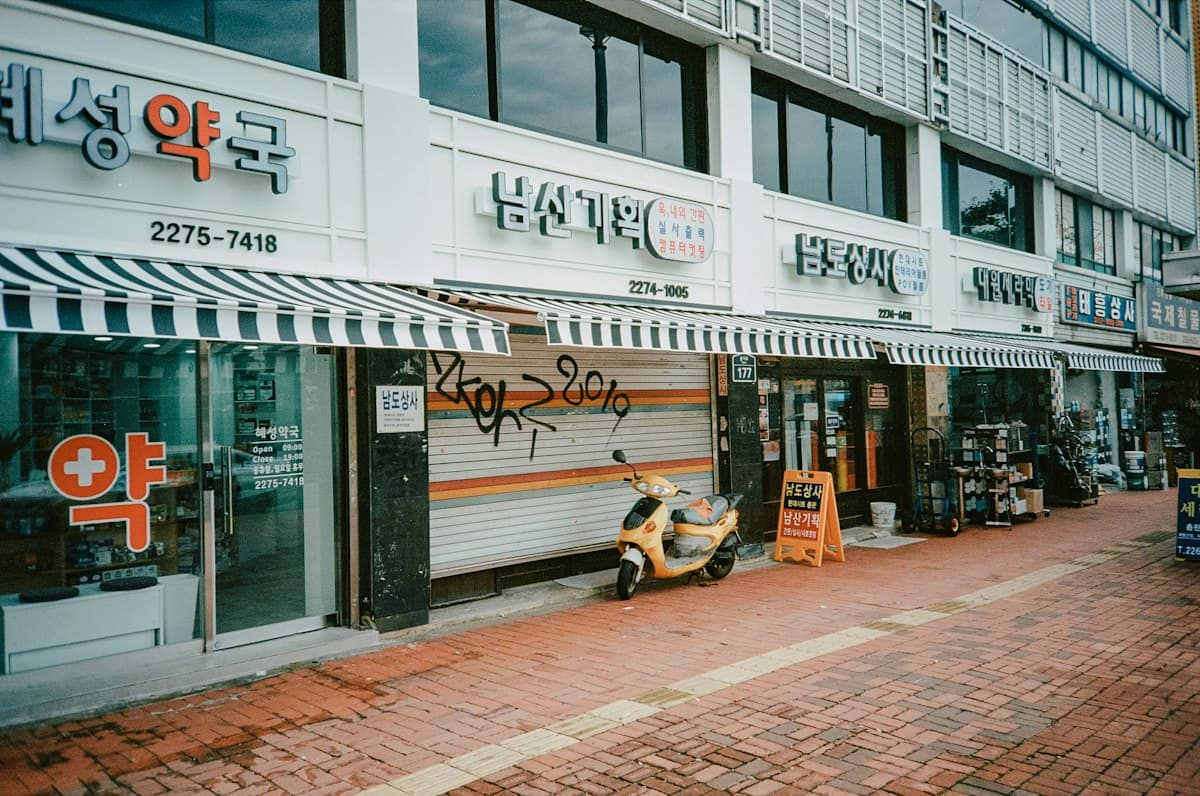
- Pharmacies (약국): after a clinic visit you take your prescription to a pharmacy, usually right next door.
What to bring
- your ARC (or passport)
- your travel insurance details, if NHIS hasn’t started yet
- a translation app. Many doctors speak some English, but reception staff may not.
What it costs
With NHIS, a basic clinic visit often costs a few thousand won plus medicine. Without NHIS you pay the full price, which is still lower than in many countries. Ask for receipts and a medical certificate (진단서) in English if you plan to claim on your travel insurance.
Emergencies
| Number | What for |
|---|---|
| 119 | Ambulance and fire. Free, with interpreters available |
| 112 | Police |
| 1330 | Korea Travel Hotline: tourist help and interpreting, 24 hours, English available |
| 1345 | Immigration help, English available |
For anything urgent at night or on weekends, go to a hospital emergency room (응급실). Expect to pay more than at a clinic.