How to throw out rubbish in Korea (and avoid fines)
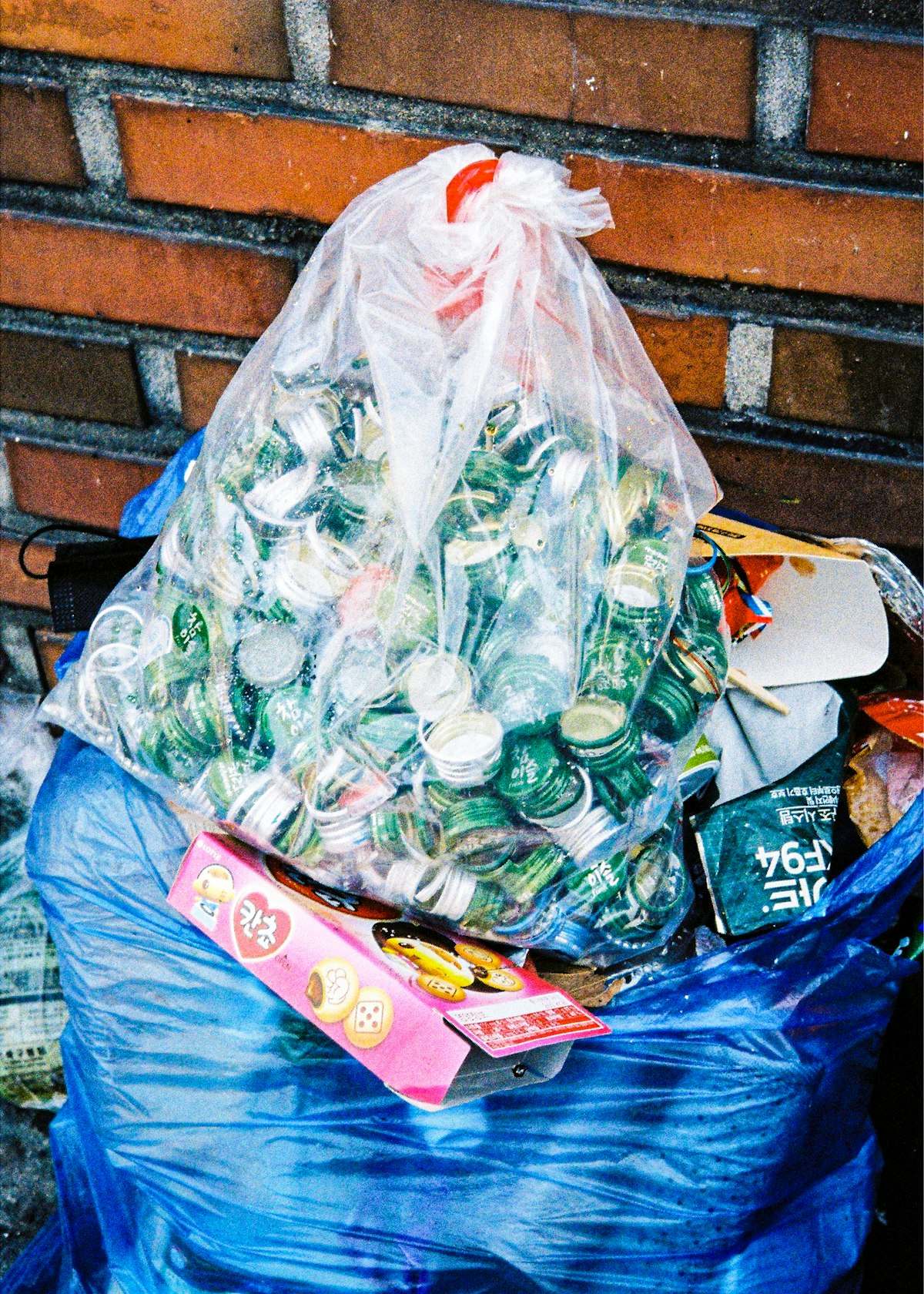
Pay-as-you-throw bags, food waste, recycling and big items, explained simply. The rules every new arrival gets wrong in the first week.
Korea takes rubbish seriously. You can’t just put everything in one bag, and people do get fined. The good news: once you know the four types, it’s easy.
The four types
| Type | Where it goes | Bag |
|---|---|---|
| General waste (일반쓰레기) | Your building’s collection point | Official pay-as-you-throw bag (종량제 봉투) |
| Food waste (음식물쓰레기) | Food waste bin or bag | Food waste bag, sticker or card |
| Recycling (재활용) | Sorted into bins by material | Usually clear bags or bins, no special bag |
| Big items (대형폐기물) | Booked pickup | Paid sticker from your district |
1. General waste
Anything that isn’t food or recycling goes in an official pay-as-you-throw bag. You buy these at convenience stores and supermarkets.
- Bags are sold by district (구). A Seoul bag from one district may not be accepted in another, so buy them near where you live.
- A 20-litre bag costs about ₩500 in much of Seoul. Prices differ by city.
- Rubbish in any other bag (a shopping bag, a black bin bag) can be left uncollected and fined.
2. Food waste
The simple rule: if an animal could eat it, it’s food waste.
Not food waste (put these in general waste): bones, eggshells, shellfish shells, fruit stones, onion skins, tea bags, and very hard seeds.
How you throw it out depends on your building:
- a bin with a card or sticker (apartments often have bins that weigh your waste and charge you)
- small food waste bags sold at convenience stores
- a shared bin in goshiwons and share houses, emptied by the manager
Drain the liquid first, and take food out of plastic packaging.
3. Recycling
Sort by material: plastic, PET bottles, cans, glass, paper, vinyl/film, styrofoam.
- Empty and rinse everything. Dirty containers count as general waste.
- PET bottles: take off the label and crush them. Clear bottles often have their own bin.
- Cardboard: flatten it and remove tape.
- Delivery food containers: wash them first, or they go in general waste.
4. Big items
Furniture, mattresses and appliances need a paid sticker from your district office, community centre (주민센터) or district website. Book a pickup, stick the sticker on, and leave it where you’re told. Small appliances can sometimes go out free, so check first.
When to put rubbish out
Many areas only collect at certain times, often in the evening (for example after 6 or 8 pm). Putting rubbish out in the morning or on a no-collection day can get you fined. Ask your landlord or neighbours, or look for a sign at the collection point.
Fines
Wrong bag, wrong time or mixed waste can mean a fine from your district. They often start around ₩100,000 and go up for repeat offences. Some streets have CCTV.
Easiest way to learn
Ask your landlord or share house manager to show you once. Every building is a little different, and most people are happy to explain.